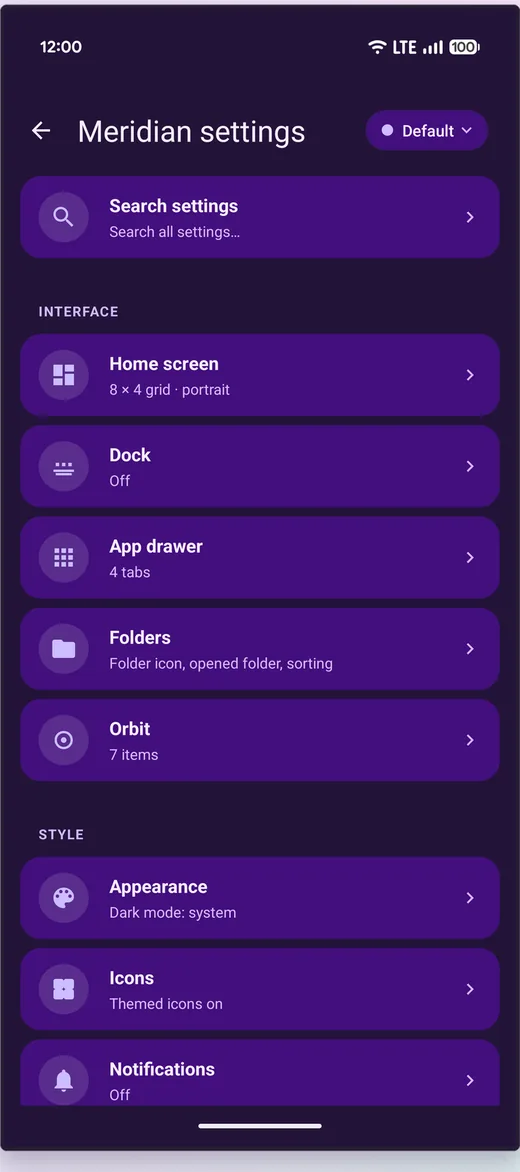
The grid
- Grids up to 16×16
- Half-cell placement, so an icon or widget can sit between cells rather than snapping to the nearest one
- Set per Space — a dense Work grid and a sparse Bedtime grid on the same phone
Icons
- Icon pack support with full compositing — background, mask and upon layers applied to apps the pack does not name explicitly, not just the ones it does
- A built-in icon-pack browser, so you can see what a pack actually covers
- Seven shapes, plus themed icons and dynamic calendar icons that show the date
- Per-icon overrides: a custom image, a custom label, or a custom launch target on any single icon
The app drawer
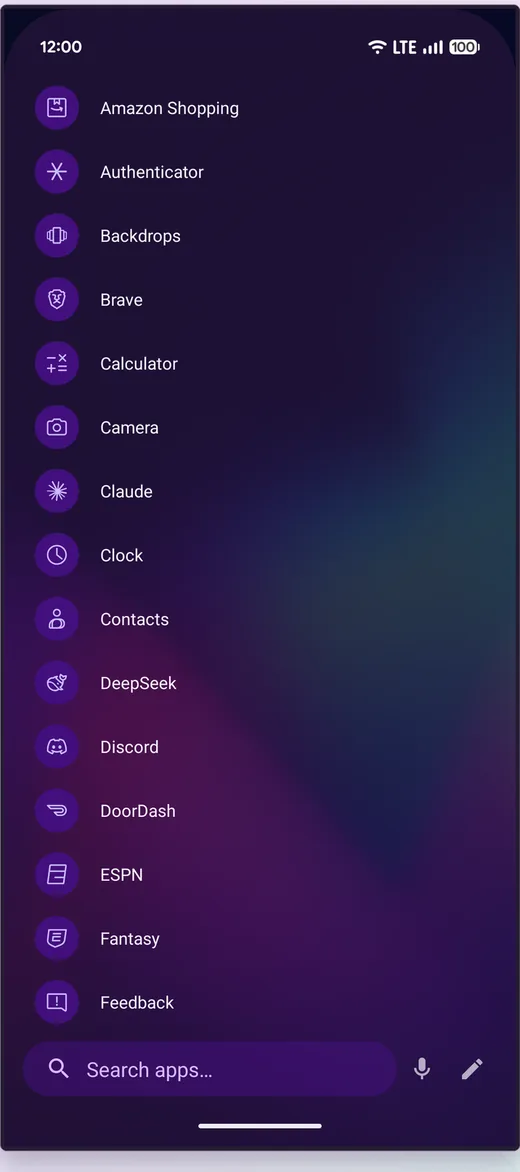
- Four layouts to choose between
- Your own tabs, arranged how you like, with drawer folders
- Hidden apps behind your fingerprint
- Search that understands initials ("gm" finds Gmail), typos and T9
- A fast scroller whose rail only takes touches that land on its letters, so the last column of icons stays tappable
Widgets
- Widget stacks you swipe through
- Resizable, and placeable on the half-cell like everything else
- Meridian's own: a smart shelf of the apps you are most likely to open next, a quick-actions grid, a current-Space card, a Space switcher, an ask-anything bar
- KLWP and KWGT widgets that behave properly — touch forwarded, offsets kept
Glass, and the system bars
- Real frosted glass behind the dock, drawer, widgets and assistant — blur, colour, opacity and radius are all adjustable, not a painted-on tint
- Meridian's cards sit on the same Material You surface other apps' widgets paint on, so a mixed home screen looks like one design
- Status and navigation bars: light or dark icons, any colour behind them, and whether that colour fades into the wallpaper or fills the bar
Backups you own
Everything — layout, settings, icon edits, gestures, Spaces — goes into a single file you keep, restorable on any device, with automatic rotating backups alongside it. There is no cloud account involved because there is no account at all. One-tap import from your previous launcher is in the setup wizard, and if a crash ever loops, safe mode catches it rather than leaving you without a home screen.